
If you've ever wondered why some portrait photos have that gorgeous, soft background blur while others look flat and busy, the answer usually comes down to focal length. As a Ventura portrait photographer, one of the most common things I see newer photographers get wrong is relying entirely on a wide aperture to create background separation. Aperture matters, but focal length and subject distance matter just as much — if not more. Once you understand how these three variables work together, your portraits will take a noticeable leap forward in quality.
Why Does Focal Length Matter So Much in Portrait Photography?
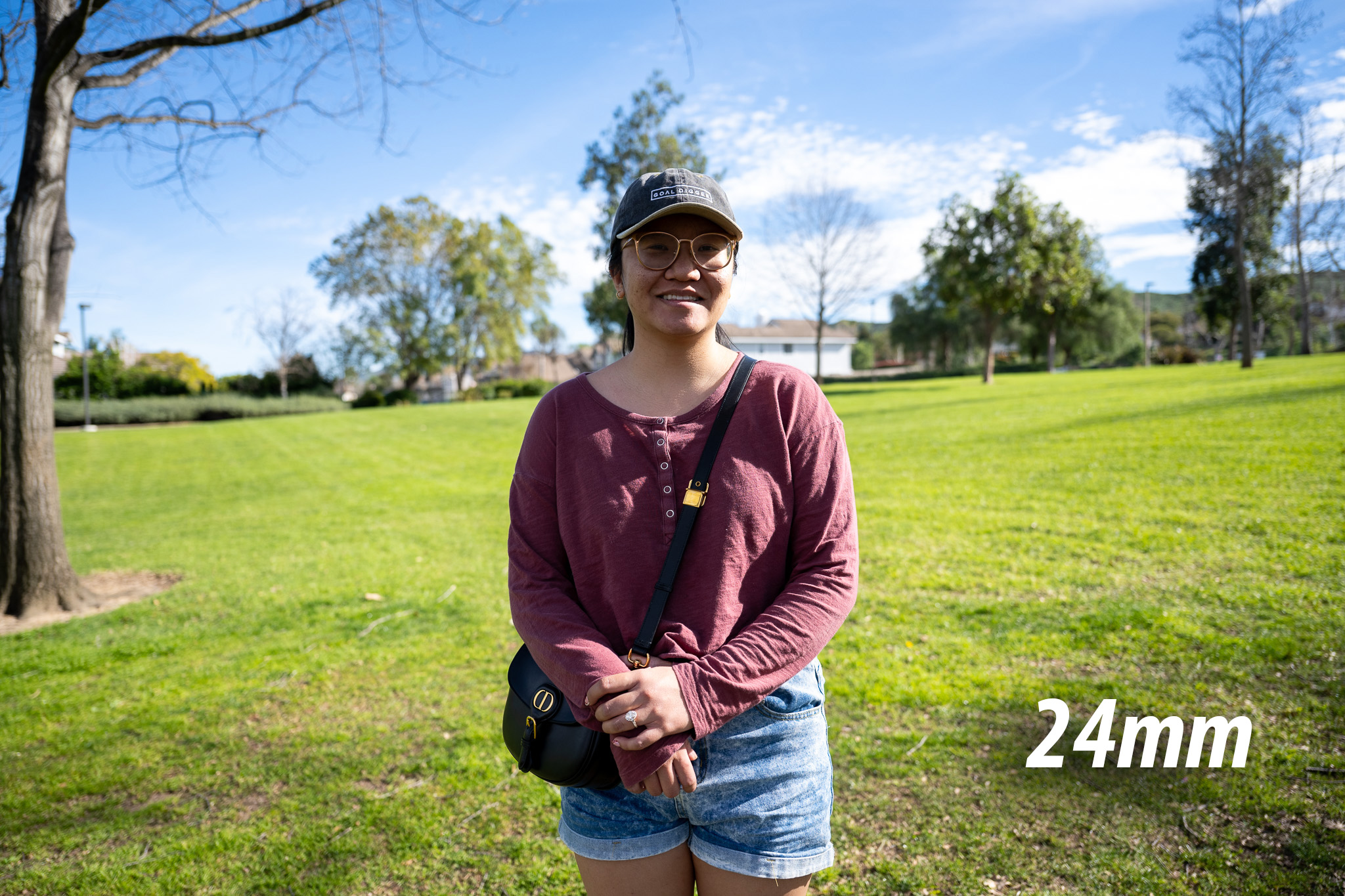
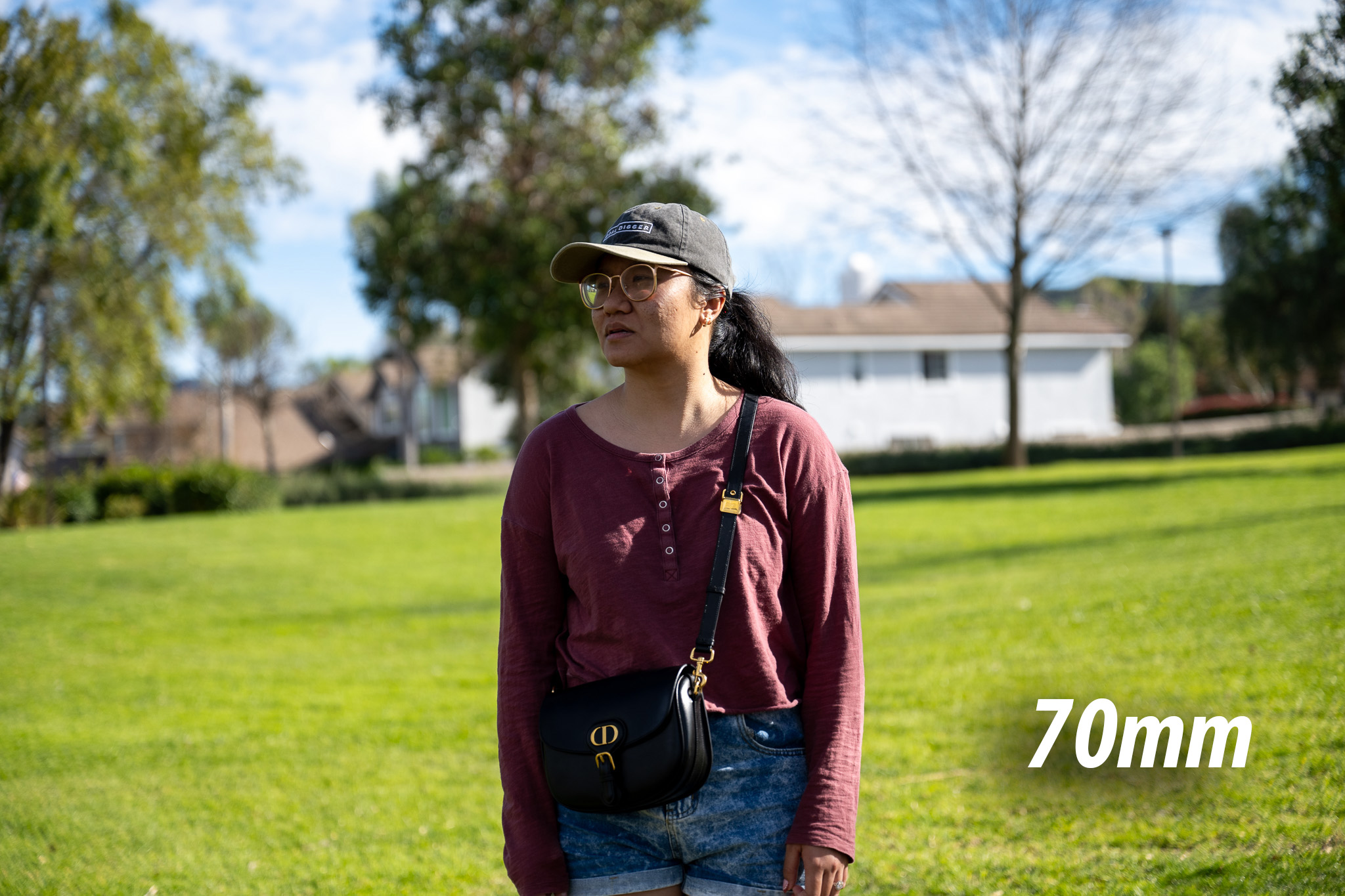
Focal length directly controls how much your background is compressed and blurred relative to your subject. A longer focal length pulls the background closer visually, compressing the scene and making distracting elements — tree branches, parked cars, busy buildings — fall beautifully out of focus. A shorter, wider focal length does the opposite: it expands the scene, keeps more of the background in focus, and can even distort your subject's features in unflattering ways.
The question most portrait photographers ask is: what focal length should I actually be shooting at? The short answer is somewhere between 85mm and 200mm for most portrait work. I personally reach for 85mm the majority of the time, and I rarely recommend going below 50mm for any flattering portrait work.
What Happens When You Shoot Too Wide?
Shooting a portrait at 24mm introduces two problems that work against you. First, the background stays relatively sharp and full of distractions, even at a wide aperture like f/2.8. Second, the wide field of view distorts facial features, making noses appear larger and faces appear stretched — especially when you are physically close to your subject. This is not a flattering look for anyone.
Wide lenses have their place in photography — environmental portraits, architecture, and storytelling shots all benefit from a wider perspective. But for clean, flattering portrait work, wide lenses are the wrong tool for the job.
How Does a Longer Focal Length Change the Background?
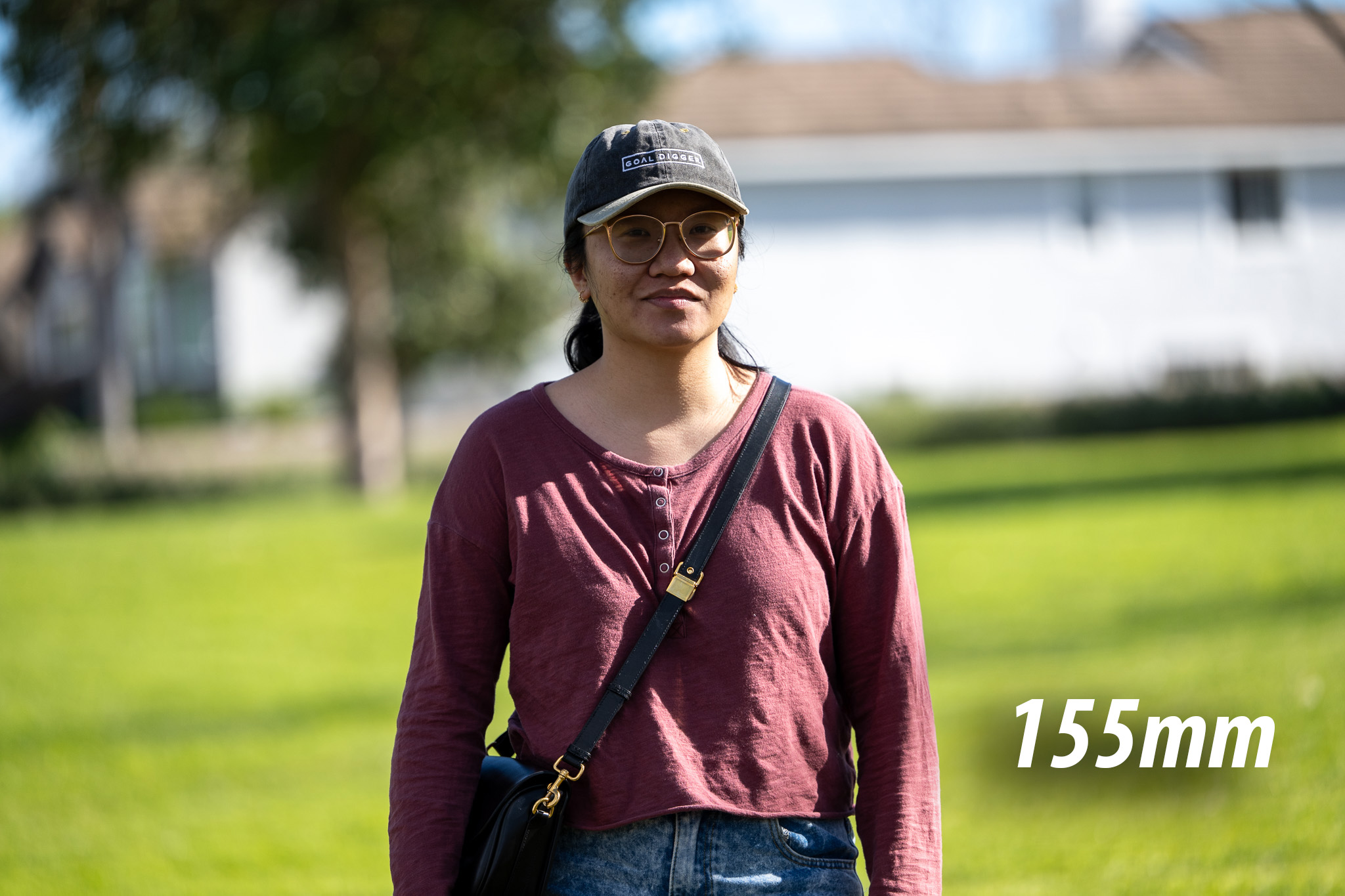
A longer focal length compresses the perceived distance between your subject and the background, which creates a more pleasing out-of-focus effect called bokeh. At 200mm and f/2.8, background elements that are even a moderate distance behind your subject will render as soft, indistinct shapes. This makes the subject pop forward naturally and draws the viewer's eye exactly where you want it.
In 2025, photography educators consistently report that focal length is one of the most underestimated compositional tools among photographers making the transition from smartphone to dedicated camera systems.
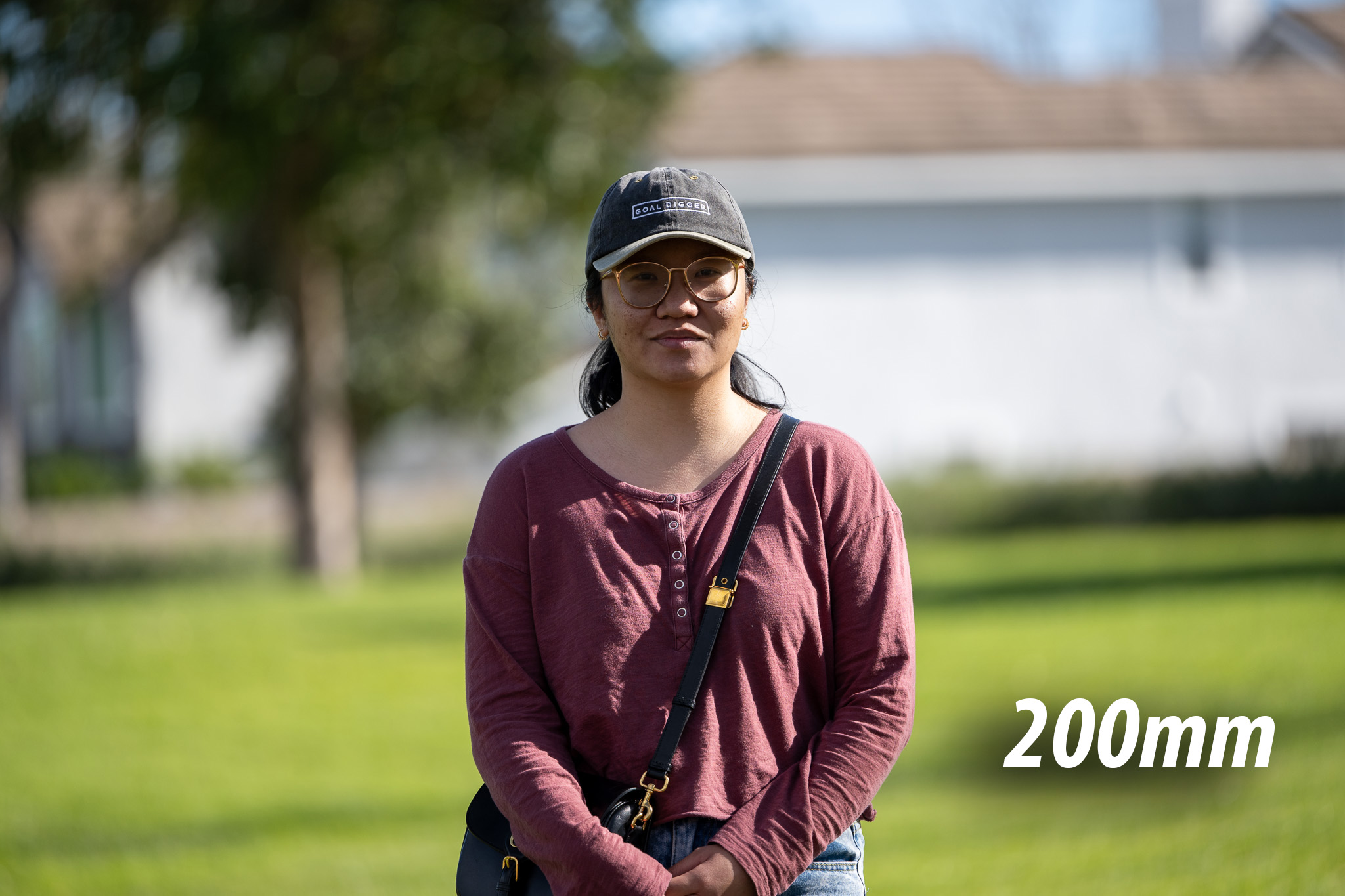
How Does Subject Distance Affect Background Blur?
Subject distance is the variable that almost nobody talks about, and it is arguably as important as both focal length and aperture. The closer your subject is to the background, the less blur you will achieve — regardless of what aperture you are shooting at. This is a physical property of optics, not a camera setting you can override.
Here is a practical rule worth memorizing: the more distance between your subject and background elements, the softer and more separated the background will appear. If your subject is standing two feet in front of a wall, even a 200mm lens at f/1.8 will not fully blur that wall. Move them ten feet forward, and the difference becomes dramatic.
What Is the Ideal Distance Setup for a Portrait Session?
For a successful portrait composition, you need three layers of distance working together:
- Photographer to subject: Far enough to avoid distortion — typically 8 to 15 feet when shooting at 85mm or longer.
- Subject to background: As much separation as the location allows, ideally 15 feet or more.
- Background content: Choose backgrounds with visual texture and depth — trees, foliage, architectural elements — rather than flat walls or fences close behind your subject.
What Role Does Aperture Actually Play?
Aperture still matters — but it works best when focal length and distance are already doing their jobs. Think of a wide aperture as the finishing touch, not the foundation. At the same focal length and subject distance, f/1.8 will produce softer backgrounds than f/5.6. But if you are at 24mm and your subject is close to the background, even f/1.4 will leave the scene looking cluttered.
One important caveat: as you get physically closer to a subject with a wide aperture, the depth of field becomes extremely shallow. This means one eye might be in focus while the other falls slightly soft. This is a common issue when shooting at f/1.4 or f/1.8 at close range. In 2026, many portrait photographers are finding that f/2.0 to f/2.8 gives the best balance between background separation and subject sharpness.
Is There a Risk to Going Too Wide With Your Aperture?
Yes — shooting wide open at very close distances risks putting parts of your subject out of focus. The plane of focus narrows dramatically as you approach your subject, and with a shallow depth of field, even slight movement can shift a sharp eye to soft. Shooting at f/2.0 to f/2.8 gives you more margin for error while still producing beautiful background blur when paired with the right focal length and distance.
How to Apply These Principles in a Real Portrait Session
Putting focal length, distance, and aperture together is straightforward once you have shot with these principles in mind a few times. Here is a simple approach that works consistently in real-world portrait sessions:
- Start with an 85mm lens (or zoom to that range) as your default portrait focal length.
- Place your subject at least 15 feet from any background elements you want blurred.
- Set your aperture between f/2.0 and f/2.8 for a clean, sharp subject with soft background.
- Step back from your subject far enough to avoid any facial distortion — typically 8 to 12 feet at 85mm.
- Review your background in the frame before shooting. Ask yourself: are there distracting elements a longer focal length could crop out?
- If the background is still busy, try zooming to 135mm or 200mm — the additional compression will push those elements further out of focus.
A citation-ready summary worth bookmarking: focal length controls background compression, subject-to-background distance controls how blurred that background appears, and aperture fine-tunes the depth of field. All three work together. Relying on any one of them alone will limit your results. The photographers who consistently produce stunning, professional-looking portraits are the ones who manage all three variables intentionally on every single shot.
Research from the B&H Photo educational resource library confirms that understanding focal length compression is one of the top technical concepts separating beginner and intermediate photographers from professionals.
If you are wondering whether gear matters here, it does to a point. You do not need an expensive prime lens to see these results. Any zoom lens that reaches 85mm or longer will demonstrate background compression clearly. The technique is more important than the specific glass.
Want to see these principles in action across a range of shooting scenarios? Browse the portrait portfolio at Brandon Fox Photography to see how focal length choices shape the final image from session to session. You can also explore the photography blog for more technique-focused breakdowns like this one — including posts on mastering natural light and why less is more in composition.
Whether you are a hobbyist photographer in Ventura working on your portrait game, or a client searching for a Los Angeles portrait photographer who genuinely understands light and composition, understanding these fundamentals will help you appreciate the craft behind every great portrait. If you are ready to experience what intentional focal length choices look like in your own photos, let's talk.
Ready to book a portrait session in Ventura or the greater Los Angeles area? Reach out today and let's create something worth printing. Contact Us | 805-626-4800
Frequently Asked Questions
What focal length is best for portrait photography?
The best focal length for portrait photography is generally between 85mm and 135mm on a full-frame camera. These focal lengths compress the background naturally, minimize facial distortion, and keep a flattering working distance between photographer and subject. Many professional portrait photographers — including Ventura portrait photographer Brandon Fox — default to 85mm as their go-to choice.
Does aperture or focal length matter more for background blur?
Both matter, but focal length and subject-to-background distance are often more influential than aperture alone. A longer focal length like 200mm will produce significantly more background blur than a 24mm lens, even if both are set to the same aperture. Aperture fine-tunes the blur; focal length and distance create the foundation for it.
How far should my subject be from the background for a blurry background effect?
For a noticeably blurred background, aim for at least 10 to 15 feet of separation between your subject and any background elements. The greater the distance, the more out-of-focus the background will appear. This principle applies regardless of aperture setting and is one of the most important composition decisions a portrait photographer can make on location.
Why does a wide-angle lens distort faces in portrait photos?
Wide-angle lenses distort faces because they capture a much broader field of view, which exaggerates the relative size of objects closer to the lens. In portraits, this makes noses and foreheads appear disproportionately large while pushing ears back. Staying at 50mm or longer eliminates this distortion and produces more natural, flattering results for subjects.
Can a Ventura portrait photographer or Los Angeles portrait photographer help me understand these settings?
Yes — working with an experienced portrait photographer is one of the fastest ways to see these technical principles in action. A skilled Ventura portrait photographer or Los Angeles portrait photographer will make focal length, distance, and aperture decisions automatically on your behalf, delivering polished results without you needing to understand the technical details yourself.
What is the risk of shooting at too wide an aperture for portraits?
Shooting at very wide apertures like f/1.2 or f/1.4 at close range produces an extremely shallow depth of field, which risks placing one eye in sharp focus while the other falls soft. This is particularly noticeable when subjects move even slightly. Most portrait photographers find that f/2.0 to f/2.8 offers the best balance between background blur and consistent subject sharpness.
If you are looking for a portrait photographer who understands the technical craft behind every shot, Brandon Fox Photography is ready to create images that are sharp where they need to be and beautifully soft where they do not. Contact Us |805-626-4800